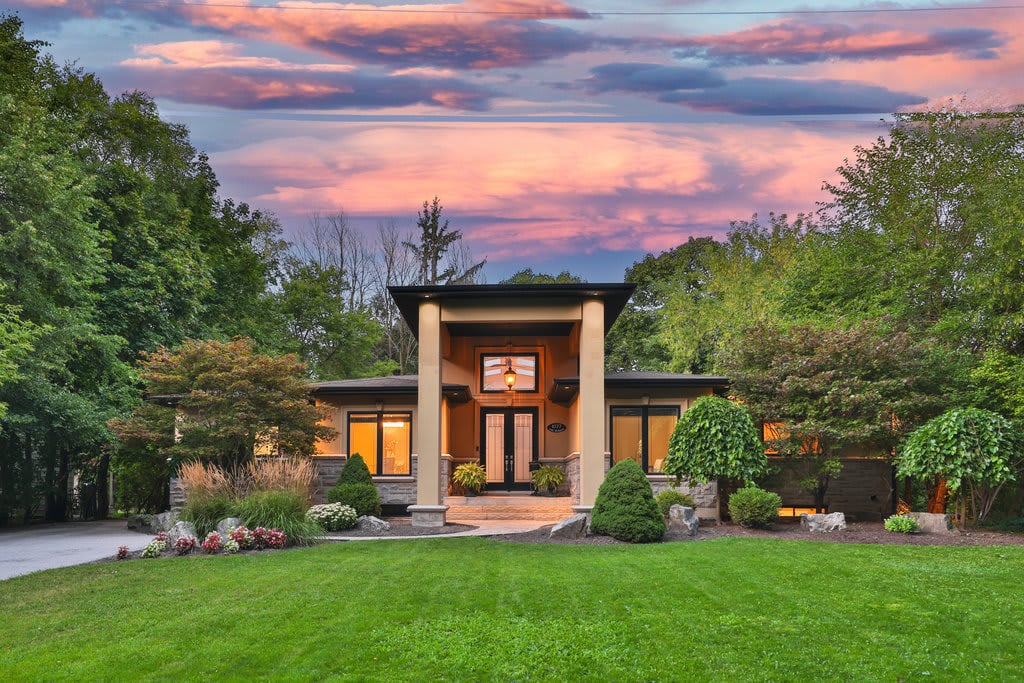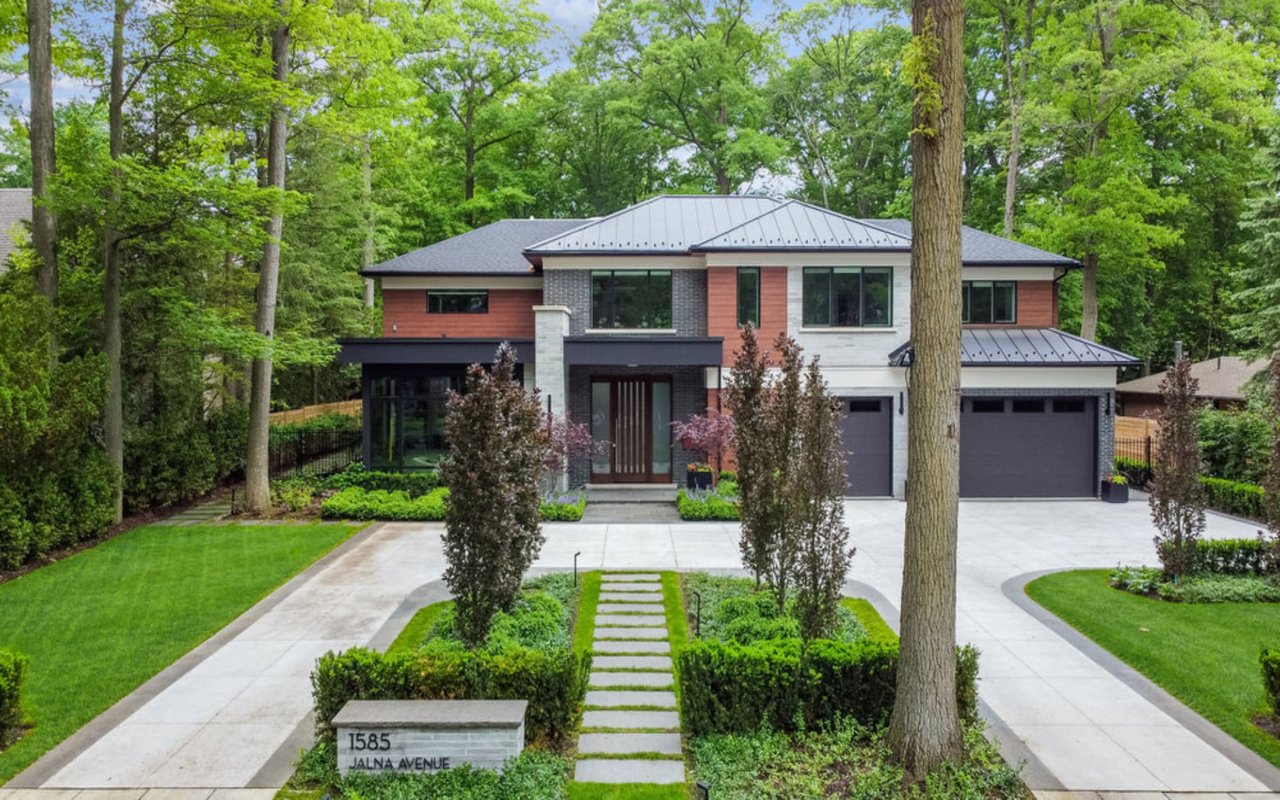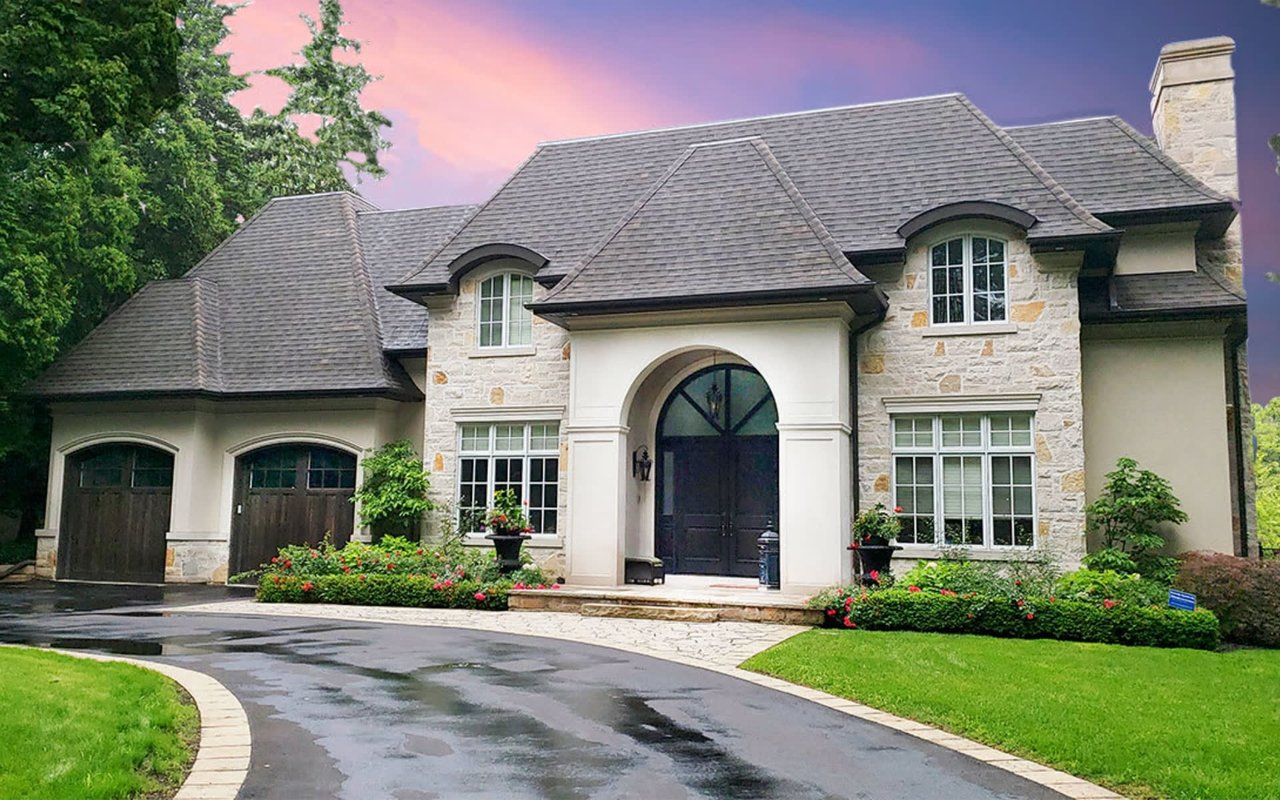
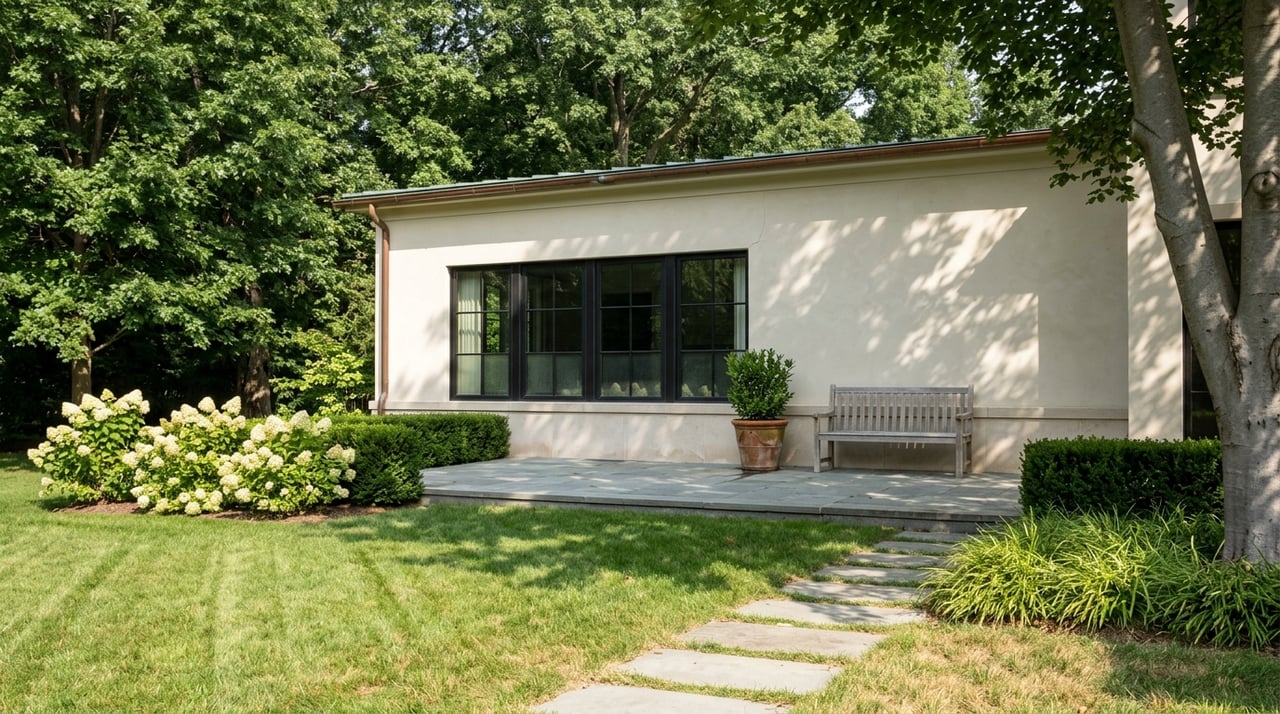
A buyer goes firm on a Gordon Woods property in the spring, planning a rebuild. The lot is deep, the frontage is generous, and the canopy is the reason they paid what they paid. In July, their designer walks the site with an arborist and comes back with a number that has nothing to do with the purchase price: the count of regulated trees standing inside the footprint they had drawn.
That number, not the zoning envelope, is what determines how much house the lot can hold. And it arrives after closing, which is the wrong order.
This is the mechanism that separates Gordon Woods from every other enclave in South Mississauga. The canopy is simultaneously the premium and the constraint. Buyers pay for it, then discover it is a regulated asset with its own permit file, its own review clock, and its own replacement math. Understanding that before you write an offer is the difference between buying a lot and buying a buildable envelope.
The permit that sets the envelope
Mississauga's Private Tree Protection By-law, By-law 0021-2022, took effect on April 1, 2022. It requires a permit to injure or remove any tree on private property measuring 15 cm in diameter or greater. That threshold is half of Toronto's commonly cited 30 cm, as Toronto Tree Services notes, which means a tree many owners would consider ordinary is captured here. On a mature Gordon Woods lot, the count runs high.
The word doing the heavy lifting is "injure." The by-law does not only regulate felling. It captures root cutting and work inside a tree's critical root zone, which sweeps in excavation, driveway work, grading, pool installation and additions. A rebuild that leaves the specimen maples standing can still trigger the file, because the machines have to reach the foundation somehow.
Here is what the arborist report has to resolve before a design is fixed:
- Which trees inside and adjacent to the proposed footprint meet the 15 cm threshold
- Whether the excavation and access route intrude on any critical root zone
- The replacement obligation, which the City ties to size at one replacement tree for every 15 cm of trunk diameter removed, so a 45 cm tree carries three
- Whether the lot can physically absorb those replacements, or whether cash in lieu applies
- The security deposit required to confirm the replanting actually happens
The City's tree permit page sets the base application fee at $399.77 including HST, with $139.72 for each additional healthy regulated tree, and gives the City 30 business days to review a complete application. Arborist reports are required for all development and construction projects. The Arborist Group reports that unauthorized removal carries exposure running as high as $100,000.
The fees are not the story. The story is the sequencing. Thirty business days is six weeks, and that clock only starts when the application is complete. Stack a minor variance on top, since most low-density lots here fall under Zoning By-law 0225-2007 and estate-scale designs routinely press against coverage and setback limits, and you have added two to four more months before a shovel moves.
Why the city-wide average tells you nothing about this pocket
Every portal will hand a Gordon Woods buyer a Mississauga number. Three of them are circulating right now, and they disagree.
| Reading | Window | What it actually measures |
|---|---|---|
| $899,002 average sale price | July 2026, TRREB Market Watch | Every residential trade citywide, condos included |
| $1,250,000 median detached sale price | Q2 2026, CREA | The middle detached trade across all of Mississauga |
| Roughly $1.7M average detached asking price | August 2026 | What sellers are asking, not what buyers pay |
None of them describes a treed estate lot in a pocket that turns over a handful of times a year. The July 2026 board data also showed 500 sales in Mississauga at 97 per cent of asking with 4.9 months of inventory and a median of 39 days on market, which reads as a balanced, patient market. Across the GTA that same month, detached homes averaged $1,291,690, and new listings fell 17.8 per cent while sales held flat, meaning supply, not demand, did the tightening.
Useful context. Useless as a comp.
In the $2M-plus segment the arithmetic changes shape. The qualified buyer pool is concentrated rather than broad, marketing windows of 30 to 90 days are normal against a general-market average closer to three weeks, and price discovery leans on land value and replacement cost precisely because three to five genuinely comparable sales often do not exist. In a small enclave of oversized, individually shaped lots, that is not an edge case. It is the default condition. Two properties on the same street can be separated by a hundred feet of depth, a valley edge, and thirty regulated trees, and the sold price of one tells you very little about the other.
Which brings the argument back to the envelope. When comps are thin, the market prices the land. When the land is canopied, the arborist defines how much of it counts.
The density permission that the canopy quietly overrides
Mississauga now permits fourplexes as of right on lots that allow detached dwellings, across zones R1 through R11, R15, R16, RM1, RM2 and RM7, under By-law 0196-2023. Building Experts Ontario's guide describes purpose-built standards as drawn from the R5 zone, allowing up to 10.6 m to the peak of a sloped roof and an additional 10 per cent of lot coverage over the base zone. The City of Mississauga says conversions have to fit inside the building footprint that existed on December 6, 2023.
On paper, that is a meaningful permission on a large lot. On a Gordon Woods lot it frequently is not the operative constraint, because the extra ten per cent of coverage has to land somewhere, and where it lands is usually occupied by regulated canopy. As-of-right zoning tells you what the City will allow. The tree file tells you what the site will give you. On these properties the second number is almost always the smaller one, and it is the one that should be driving the offer price.
The second clearance, on the valley side
Lots along the Credit River valley edge, including those backing onto the Mississauga Golf & Country Club, sit inside Credit Valley Conservation's regulated area. CVC's Watershed Planning and Regulation Policies, 2025 implement Ontario Regulation 41/24 under the Conservation Authorities Act. For a valley-edge property, confirm early whether the proposed work requires CVC review and what site-specific information will be needed; the regulated-area designation makes that a question to resolve before treating the lot as build-ready.
The two construction clocks at the front door
The enclave's location arguments, minutes to the QEW and Highway 403, walking distance to the Hurontario corridor, close to both Cooksville GO and Port Credit GO on the Milton and Lakeshore West lines, are all true. They are also, right now, descriptions of active construction zones. Here is the sequence as it currently stands:
- June–July 2025. Groundbreaking at 2250 Hurontario Street, the southwest corner of Hurontario and The Queensway, on The Peter Gilgan Mississauga Hospital and the Shah Family Hospital for Women and Children took place in June. A $13.9 billion design, build, finance and maintain contract was awarded to ED+PCL Healthcare Partners in July.
- June 19, 2026. First concrete poured for the foundation, marked with a ceremonial coin toss, with excavation roughly 78 per cent complete and about 250 trucks moving in and out of the site daily.
- August 10, 2026. The Hazel McCallion Line, 18 kilometres and 19 stops from Port Credit GO to Steeles Avenue, entered its vehicle testing phase.
- Spring 2028. Metrolinx's current substantial completion target for the line, reported in April 2026, with testing and commissioning still to follow. Mayor Carolyn Parrish said in late 2025 she does not expect to see riders before 2029.
- 2033, then 2034. Hospital construction complete, first patients the following year, in a 22-storey, 2.8-million-square-foot facility with more than 950 beds and operating rooms rising from 14 to 26.
Ward 7 Councillor Dipika Damerla has flagged the risk of the two projects compounding into traffic problems, and through spring 2026 crews were welding track and pouring guideway at Hurontario just south of The Queensway, with overnight work, lane closures, noise and vibration.
Read as a pricing input rather than a complaint, this is unusually legible. Most neighbourhood disruption has no end date. This has two, both published, both attached to assets that get materially better on the far side: a rapid transit line at the corridor's edge and, at peak, roughly 2,800 health professionals working a few minutes north. Today's Gordon Woods pricing embeds a disruption discount with a known expiry. That is a very different thing from a discount with no reason to close.
What this changes at the table
If you are buying, the due diligence sequence inverts. The arborist walk belongs inside the conditional period, not after it, and on valley-edge lots the conservation question belongs before the building permit conversation, not after. Price the envelope, then price the house.
If you are selling, the same logic runs in reverse and in your favour. A property that arrives with the canopy documented, the buildable envelope demonstrated and the constraints already resolved removes the exact uncertainty that makes a thin-comp buyer discount their offer. In a segment where marketing windows run 30 to 90 days and the qualified buyer pool is small, the listing that answers the hard question first is the one that holds its price.
The Papousek Team has spent decades pricing land in South Mississauga, and Gordon Woods is the pocket where that skill matters most, because the average will never tell you what your lot is worth. If you are weighing a rebuild against a sale, or evaluating a lot before you commit, schedule a private consultation and we will start with the envelope.
FAQ
Do I need a tree permit if I am renovating rather than rebuilding? Possibly. Mississauga's by-law regulates injury as well as removal, and work inside a tree's critical root zone can trigger a permit even when nothing is cut down. Excavation for an addition, a pool or a new driveway are the common triggers. Confirm with the City's Forestry section before drawings are finalized.
How far ahead should I plan for approvals on a Gordon Woods rebuild? Build the schedule backwards from the longest clock. The City has 30 business days to review a complete tree permit application, a minor variance through the Committee of Adjustment commonly adds two to four months, and on a regulated valley-edge lot conservation review may also be needed.
Does the hospital and LRT construction affect resale values now? It affects what buyers are willing to pay during the disruption. The relevant distinction is that both projects have published horizons, spring 2028 for substantial completion of the line and 2034 for the hospital's first patients, so the discount attaches to a defined period rather than a permanent condition.
Can I get a reliable valuation from online estimates? Not in this pocket. Automated models depend on comparable sales, and a small enclave of individually shaped estate lots does not generate enough of them. Valuation here is a land exercise, built from lot geometry, the buildable envelope and replacement cost.
This article is general information, not legal, tax or financial advice. Consult a qualified professional about your situation.